
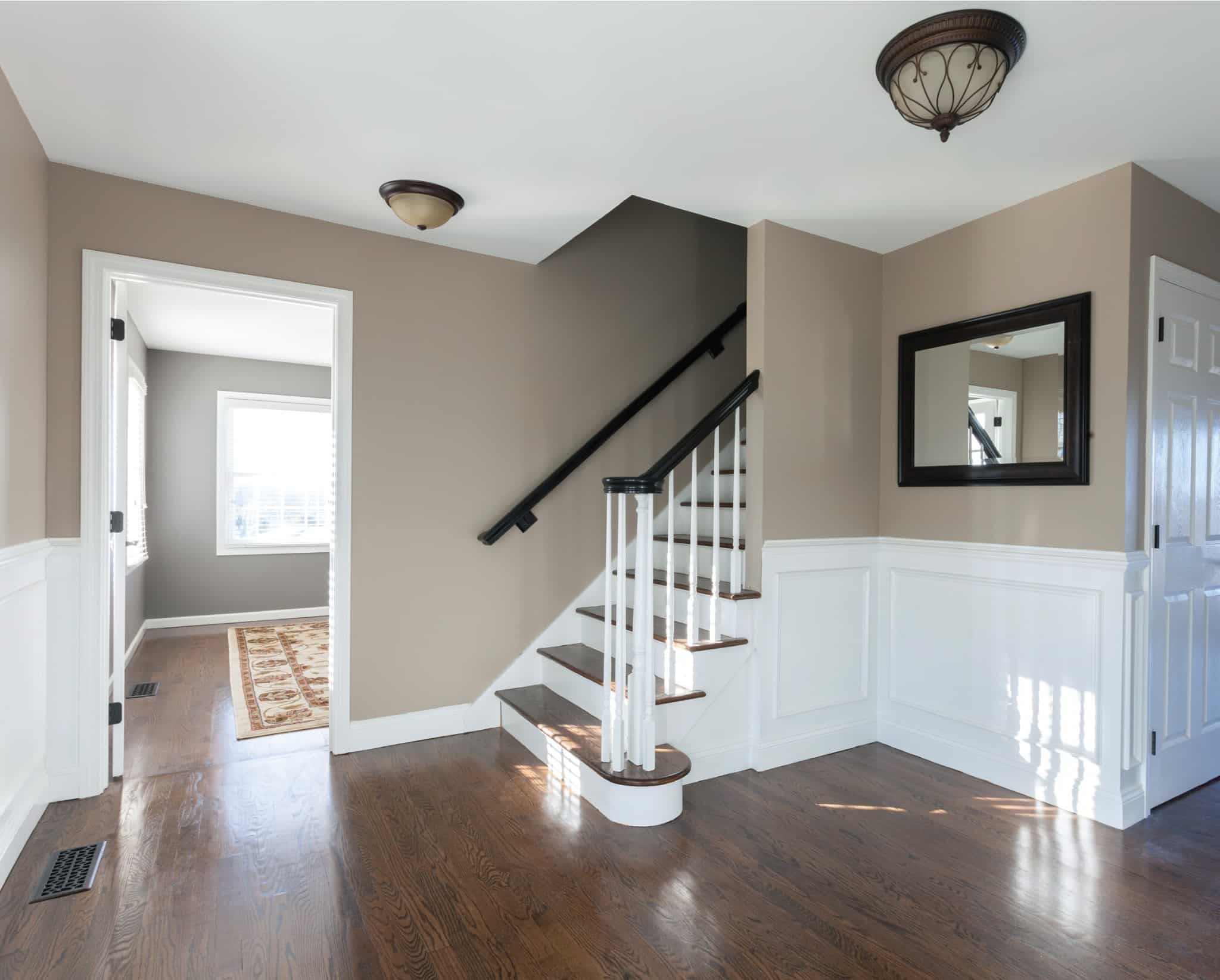
Take a walk through your home and really look at the walls. You might notice a hallway that has gone dull, a kitchen wall dotted with grease marks that no amount of scrubbing removes, or a living room color that felt fresh a decade ago and now feels tired. Those are some of the clearest signs you need interior painting, and most homeowners live with them far longer than they should.
Interior paint does more than set the mood of a room. It seals drywall, protects trim from daily wear, and keeps moisture from working its way into surfaces. When paint starts to fail, it stops doing that job quietly in the background.
After more than twenty years painting homes throughout Williamsburg and James City County, we’ve learned to read walls the way a mechanic reads an engine. This guide walks you through the seven signs that tell you it’s time to repaint, how long interior paint really lasts here in coastal Virginia, and how to decide whether the job is a weekend project or one worth handing to a pro.
Key Takeaways
- Most interior walls need repainting every 7 to 10 years, but high-traffic rooms like kitchens and hallways often need it sooner.
- Fading, stubborn scuffs, and cracking or peeling paint are the three most common early warning signs.
- Coastal Virginia humidity, strong summer sun, and heavy pollen all shorten paint lifespan, especially in bathrooms and sun-facing rooms.
- Some repaints are purely cosmetic, while others protect drywall and trim from lasting damage.
- Repainting before selling is one of the highest-return improvements a homeowner can make.
- Simple maintenance like gentle cleaning and quick touch-ups can add years between full repaints.
- When you’re unsure, a professional evaluation costs nothing and takes the guesswork out of it.
Table of Contents
How Often Should You Repaint Your Home’s Interior?
Most homes need an interior repaint every 7 to 10 years, though busy rooms like kitchens, hallways, and living rooms often need attention sooner. The real answer depends on how a room is used, how much sunlight it gets, and the quality of the last paint job.
Think of it less as a fixed schedule and more as a range. A guest bedroom that sees light use might hold its finish for a decade or more. A mudroom that takes muddy boots, backpacks, and dog paws every day can look worn in three or four years.
Here in the Williamsburg area, our climate plays a role too. Coastal humidity, hot summers, and strong UV coming through windows all age paint faster than they would in a drier, milder place. That’s why so many local homeowners repaint their high-traffic spaces on a shorter cycle than the bedrooms upstairs.
The seven signs below will help you judge where your own home falls in that range. You don’t need all seven to justify a repaint. Often one or two are enough.
1. Your Paint Looks Faded
Faded interior paint is one of the clearest signs you need interior painting. When color looks washed out, uneven, or lighter near windows than in the corners, the finish has broken down and lost its richness. This is cosmetic in most cases, but it makes a whole room feel dated and neglected.
Fading usually starts where sunlight hits hardest. South- and west-facing rooms take the worst of it, and by late summer the difference can be striking. Pull a picture frame off a sunny wall and you’ll often see a darker rectangle underneath, a clear record of how much the surrounding color has faded.
Deeper and bolder colors fade faster than soft neutrals because they carry more pigment for the sun to break down. Reds, deep blues, and rich greens are the usual first to go.
Paint quality matters here too. Premium paints from brands like Sherwin-Williams and Benjamin Moore use higher-grade pigments and resins that hold their color far longer than budget lines. Spending a little more up front often means several extra years before fading shows.
Maintenance tip: Sheer curtains or a UV-filtering window film slow fading in your sunniest rooms and buy you extra time between repaints.
2. Scuffs and Stains Will Not Come Off
When scuff marks, handprints, and stains stop wiping away, your paint has lost its protective surface. A fresh, quality finish cleans up with a damp cloth. Once cleaning stops working, or starts rubbing off the color itself, it’s time to repaint the affected walls.
This shows up first in the busiest parts of a home. Entryways, stairwells, hallways, and mudrooms take constant contact from hands, shoulders, shoes, and pet tails. Busy family homes throughout Toano and Norge often see these areas wear faster than anywhere else in the house.
Kitchens have their own version of this problem. Cooking grease combines with everyday dust to form a film that grabs onto flat paint and won’t let go. That’s why kitchen walls often need repainting before the rest of the house catches up.
The finish, or sheen, of your paint makes a big difference in how well walls clean. Flat and matte finishes hide imperfections beautifully but are the hardest to scrub. Eggshell and satin strike a better balance for family spaces, and semi-gloss stands up best of all in kitchens and bathrooms.
| Finish | Best For | Cleanability |
| Flat / Matte | Ceilings, low-traffic bedrooms | Low |
| Eggshell | Living rooms, dining rooms | Moderate |
| Satin | Hallways, kids’ rooms, family spaces | Good |
| Semi-Gloss | Kitchens, bathrooms, trim, doors | Excellent |
| Gloss | Cabinets, high-wear trim | Excellent |
Maintenance tip: Clean marks with a soft sponge and mild soap rather than an abrasive cleaner. Scrubbing too hard on flat paint can leave a shiny spot that’s more noticeable than the stain was.
3. Paint Is Cracking, Peeling, or Bubbling
Cracking, peeling, or bubbling paint is more than a cosmetic problem. It usually points to moisture, poor surface prep, or a failing bond between coats, and it means the paint is no longer protecting the surface underneath. This kind of failure should be addressed before it spreads.
Bubbling and peeling almost always trace back to moisture. In our area, bathrooms without good ventilation are the usual suspects, along with walls near windows that let in humid air. Once water gets behind the paint film, it lifts the coating away from the wall.
Cracking, sometimes called alligatoring when it forms a scaly pattern, often comes from paint applied over a dirty or glossy surface without proper prep. It can also happen when too many coats have built up over the years.
Whatever the cause, the fix is the same at its core: find and stop the moisture source, then scrape, sand, prime, and repaint properly. Painting over failing paint without addressing the prep just guarantees the problem comes back. This is one area where our interior house painting crews spend real time on preparation before a single drop of new paint goes on.
Maintenance tip: Run the exhaust fan during and after every shower, and leave it going for a good ten minutes afterward. Good ventilation is the cheapest way to protect bathroom paint.
4. Your Walls Have Dents, Nail Holes, or Drywall Damage
Dents, nail holes, and drywall damage are a natural sign it’s time to refresh a room. Every time you rearrange furniture, move a gallery wall, or bump a corner with a laundry basket, the walls collect small marks. Repainting is the perfect moment to repair them all at once.
Older colonial-style homes around Williamsburg often show nail pops, small bumps where a drywall nail has worked its way loose over years of the house settling and expanding. Newer construction neighborhoods aren’t immune either. Fresh lumber dries and shifts in its first few years, which can open small cracks at corners and seams.
Good drywall repair is where a professional finish really shows. Filling a hole is easy. Blending the patch so it disappears under the new coat takes proper feathering, sanding, and priming. A rushed patch shows through as a dull spot or a slight bump once the light hits it.
If the damage goes beyond simple holes, such as water-stained drywall or damaged trim, it’s worth looping in carpentry and home repair work before painting so everything gets fixed together.
Maintenance tip: Keep a small container of your wall color labeled by room. Quick touch-ups on minor dings keep them from adding up into a bigger job.
5. Your Paint Colors Feel Outdated
Sometimes the paint is holding up fine, but the color simply feels stuck in another decade. Heavy tans and golds, deep accent walls, and the once-popular sponge and faux finishes can make an otherwise well-kept home feel dated. A color update is one of the fastest ways to modernize a space.
Color trends move slowly but they do move. Warm, creamy whites and soft, layered neutrals have replaced the yellow-based beiges that were everywhere fifteen years ago. Greens and warmer earth tones have come back in a softer, more livable form.
You don’t have to chase trends to benefit from a refresh. Even repainting in a cleaner version of your current color can wake up a room. The goal is a home that feels current and intentional rather than frozen in time.
If you’re repainting walls anyway, it’s a good moment to think about trim and doors too. Updating dated trim color, or refreshing tired kitchen cabinets with cabinet painting, can transform how modern a space feels for a fraction of the cost of replacing anything.
Maintenance tip: Test colors on the actual wall, not just a swatch, and look at them at different times of day. Our coastal light shifts a lot between morning and evening, and a color can read very differently by lamplight.
6. You Are Getting Ready to Sell Your Home
Fresh interior paint is one of the highest-return improvements you can make before selling. It’s relatively inexpensive, it makes every room feel clean and cared for, and it helps buyers picture themselves in the space. For most sellers, it pays for itself many times over.
Buyers form an impression within seconds of walking in. Scuffed walls, bold personal colors, or a patchwork of touch-ups all raise the same silent question: what else hasn’t been kept up? A clean, neutral interior answers that question before it’s asked.
Yorktown and James City County homeowners preparing to sell often choose soft, neutral colors to help rooms feel bright and move-in ready. Warm whites, greiges, and light gray-greens photograph well for online listings and appeal to the widest range of buyers.
The interior isn’t the whole story, of course. Curb appeal matters just as much, and refreshing exterior paint or clearing away years of grime with pressure washing can lift a home’s first impression before a buyer ever steps inside. You can see examples of this kind of before-and-after work in our project gallery.
Maintenance tip: Stick to neutral, widely appealing colors for a sale even if bold shades are your personal taste. You can always express your style in your next home.
7. It Has Been More Than 7-10 Years Since Your Last Interior Paint Job
If it’s been more than 7 to 10 years since your last interior paint job, your walls are almost certainly due, even if the damage isn’t obvious yet. Paint breaks down gradually, and because the change is slow, most homeowners stop seeing it. A fresh coat often surprises people with how much brighter their home feels.
Time affects more than color. Older paint grows more brittle, bonds less well to the surface, and becomes harder to clean as its protective qualities wear down. What looks acceptable today may start failing in the next year or two.
There’s a practical reason to track this too. If you honestly can’t remember when a room was last painted, that’s usually a sign it’s overdue. Homes that have changed hands often carry paint that’s older than the current owners realize.
Newer paint formulas have also improved a great deal over the last decade. Today’s premium lines clean better, resist scuffing more effectively, and hold color longer than what was on the shelf ten years ago. A repaint isn’t just refreshing the color, it’s upgrading the wall’s durability.
Maintenance tip: Write the paint date and color name on the inside of a closet door or the back of a light switch plate in each room. Future you will be grateful.
How Long Does Interior Paint Usually Last?
Interior paint typically lasts 5 to 10 years, but the exact lifespan depends heavily on the room. High-traffic and high-moisture spaces wear out fastest, while quiet rooms and ceilings can go a decade or longer. Here’s a general guide for how often different areas need repainting.
| Room / Surface | Typical Repaint Timeline | Why |
| Hallways & Entryways | 3-5 years | Constant contact and traffic |
| Kitchens | 3-5 years | Grease, moisture, heavy use |
| Bathrooms | 3-5 years | Humidity and steam |
| Bedrooms | 7-10 years | Light, gentle use |
| Living & Dining Rooms | 5-7 years | Moderate daily wear |
| Trim & Doors | 4-6 years | Frequent touching and scuffing |
| Ceilings | 10+ years | Little contact or wear |
These ranges are starting points, not rules. Five things move any room up or down the scale: humidity, sunlight, how heavily the room is used, how well the surface was prepped, and the quality of the paint itself. Get all five working in your favor and paint lasts noticeably longer.
That last point about prep and paint quality is the one homeowners underestimate most. The Paint Quality Institute notes that proper surface preparation and premium paint together are the biggest factors in how long a finish holds up. It’s the difference between repainting in four years and repainting in eight.
Should You Repaint Yourself or Hire a Professional?
A single accent wall or a small bedroom can be a reasonable DIY project for a confident homeowner. Whole-home repaints, high ceilings, heavy prep work, and detailed trim are where hiring a professional usually saves time, money, and frustration in the long run.
The paint itself is rarely where DIY projects go wrong. It’s the prep. Proper caulking, patching, sanding, and priming is slow, tedious work, and it’s exactly what separates a finish that lasts from one that peels in two years. Professionals also carry the right tools for clean lines, even coats, and safe work at height.
| Consideration | DIY | Professional |
| Upfront cost | Lower | Higher |
| Time investment | High (your weekends) | Low (handled for you) |
| Prep & repair quality | Varies | Consistent |
| Finish durability | Depends on skill | Built to last |
| High ceilings & stairwells | Risky | Equipped and safe |
There’s a cost angle worth being honest about. DIY looks cheaper on paper, but redoing a job that failed early, or fixing drips and uneven lines, often erases the savings. A job done right the first time tends to be the better value over the life of the paint.
If you’d rather skip the guesswork, our team is happy to take a look and give you a straightforward opinion. You can request a free painting estimate and we’ll tell you honestly what a room needs.
Interior Painting Tips for Williamsburg-Area Homes
Homes in our part of Virginia face a specific mix of conditions, and painting with those in mind makes a real difference. Coastal humidity, hot summers, mild winters, and heavy spring pollen all shape how interior paint performs and how long it lasts.
For bathrooms, laundry rooms, and other damp spaces, lean toward moisture-resistant paints in satin or semi-gloss. These finishes shrug off humidity far better than flat paint and are much easier to wipe down when mildew tries to take hold.
In sun-drenched rooms, especially those facing south and west, choose quality paints with strong fade resistance and consider your boldest colors carefully. That gorgeous deep blue may look faded on the sunny wall long before the shaded one shows any change.
Colonial-style and historic homes around Williamsburg often have real wood trim, plaster, and older surfaces that reward careful prep. Rushing these details rarely pays off. Newer neighborhoods in Toano and Providence Forge, meanwhile, tend to need attention to settling cracks and nail pops in those first few years.
One local timing tip: spring pollen season coats everything, indoors and out. If you’re planning interior work, it’s worth wiping down surfaces and keeping windows managed during the heaviest pollen weeks so it doesn’t settle into fresh paint. You can learn more about our full range of residential painting services or read about our local team and approach.
Frequently Asked Questions
How often should I repaint the inside of my home?
Most homes benefit from an interior repaint every 7 to 10 years, but it varies by room. High-traffic and high-moisture spaces like kitchens, bathrooms, hallways, and entryways often need fresh paint every 3 to 5 years, while bedrooms and ceilings can go much longer. The best approach is to watch for the warning signs rather than following a strict calendar. Fading, stubborn scuffs, cracking, and visible wear all tell you a room is ready. Here in the Williamsburg area, humidity and strong sun tend to shorten these timelines, so busy and sunny rooms usually need attention first.
What rooms need repainting most often?
Kitchens, bathrooms, hallways, and entryways wear out fastest. Kitchens deal with grease and moisture, bathrooms battle humidity and steam, and hallways and entryways take constant physical contact from hands, shoulders, and shoes. In busy family homes, mudrooms and stairwells often show wear quickly too. Bedrooms, formal dining rooms, and ceilings hold up much longer because they see gentler, less frequent use. If you’re prioritizing where to spend your painting budget, starting with your busiest and dampest rooms almost always gives you the biggest visual improvement for the money.
Is faded interior paint a sign I need to repaint?
Yes. Fading is one of the clearest signs your paint has broken down and lost its protective and decorative qualities. It shows up most in rooms that get strong sunlight, particularly those facing south and west. You’ll often notice it as uneven color, a washed-out look, or a darker patch behind a picture frame you’ve moved. While faded paint is usually a cosmetic issue rather than a structural one, it makes an entire room feel tired and dated. Repainting with a quality, fade-resistant paint restores the color and buys you more years before it happens again.
Should I repaint before selling my home?
In most cases, yes. Fresh interior paint is one of the most cost-effective improvements you can make before listing, and it often returns far more than it costs. Clean, neutral walls make rooms feel bright, cared for, and move-in ready, which helps buyers picture themselves in the space. Bold or worn paint can quietly raise doubts about how well the rest of the home was maintained. Neutral colors also photograph better for online listings, where most buyers form their first impression. If you only tackle a few rooms, focus on the ones buyers see first.
What interior paint colors are best for resale?
Soft, warm neutrals are the safest and most appealing choices for resale. Warm whites, light greiges, and gentle gray-greens work well because they feel clean and fresh without imposing a strong personal style. These colors help rooms feel larger and brighter, and they appeal to the widest range of buyers. Yorktown and James City County sellers frequently choose these tones to keep listings feeling neutral and move-in ready. Save bold, distinctive colors for the home you plan to stay in. For a sale, the goal is a blank, welcoming canvas that lets buyers imagine their own furniture and style.
Can I paint over damaged walls?
You can, but you shouldn’t skip the repair step. Painting over cracks, holes, dents, or peeling areas without fixing them first just highlights the damage under a fresh coat, and the problem usually returns. Proper repair means filling holes, patching drywall, addressing any moisture source, sanding smooth, and priming before painting. Done well, these repairs disappear completely under the new finish. Nail pops and settling cracks are especially common in both older colonial homes and newer construction around Williamsburg, so it’s worth handling them properly rather than covering them up.
How do I know if I need drywall repair before painting?
Look for visible holes, dents, hairline cracks, nail pops (small round bumps where a nail has pushed out), water stains, or soft, spongy areas. Run your hand along the wall and check corners and seams, which are common spots for settling cracks. Water stains deserve special attention because they signal a moisture problem that needs to be found and fixed before any painting begins. If you’re unsure how serious the damage is, a professional evaluation can tell you quickly. Minor dings are easy to patch, but larger drywall damage or moisture issues are worth addressing properly first.
Should I hire a professional interior painter or do it myself?
It depends on the size and complexity of the job. A small bedroom or single accent wall can be a fair DIY project. Whole-home repaints, high ceilings, detailed trim, and heavy prep work are usually better handled by professionals. Most DIY jobs run into trouble not with the painting itself but with the prep, which is slow, detailed, and easy to underestimate. Professionals also work safely at height and produce consistent, durable results. If the job feels bigger than a weekend or involves significant repairs, hiring a pro often saves money over time by getting it done right the first time.
Schedule Your Free Interior Painting Estimate
If you spotted your home in more than one of these signs, you’re not alone, and there’s no rush to tackle everything at once. Sometimes the smart move is starting with your busiest rooms and working outward from there.
When you’re ready, we’re glad to take a look and give you honest, no-pressure advice about what your home actually needs. After two decades painting homes throughout Williamsburg, Toano, Norge, Providence Forge, Yorktown, and James City County, we’ve seen just about every interior challenge our local homes can throw at us.
Request your free interior painting estimate and we’ll help you decide what’s worth doing now and what can wait. Whether it’s a single tired room or a whole-home refresh, we’ll give you a clear, straightforward plan.