
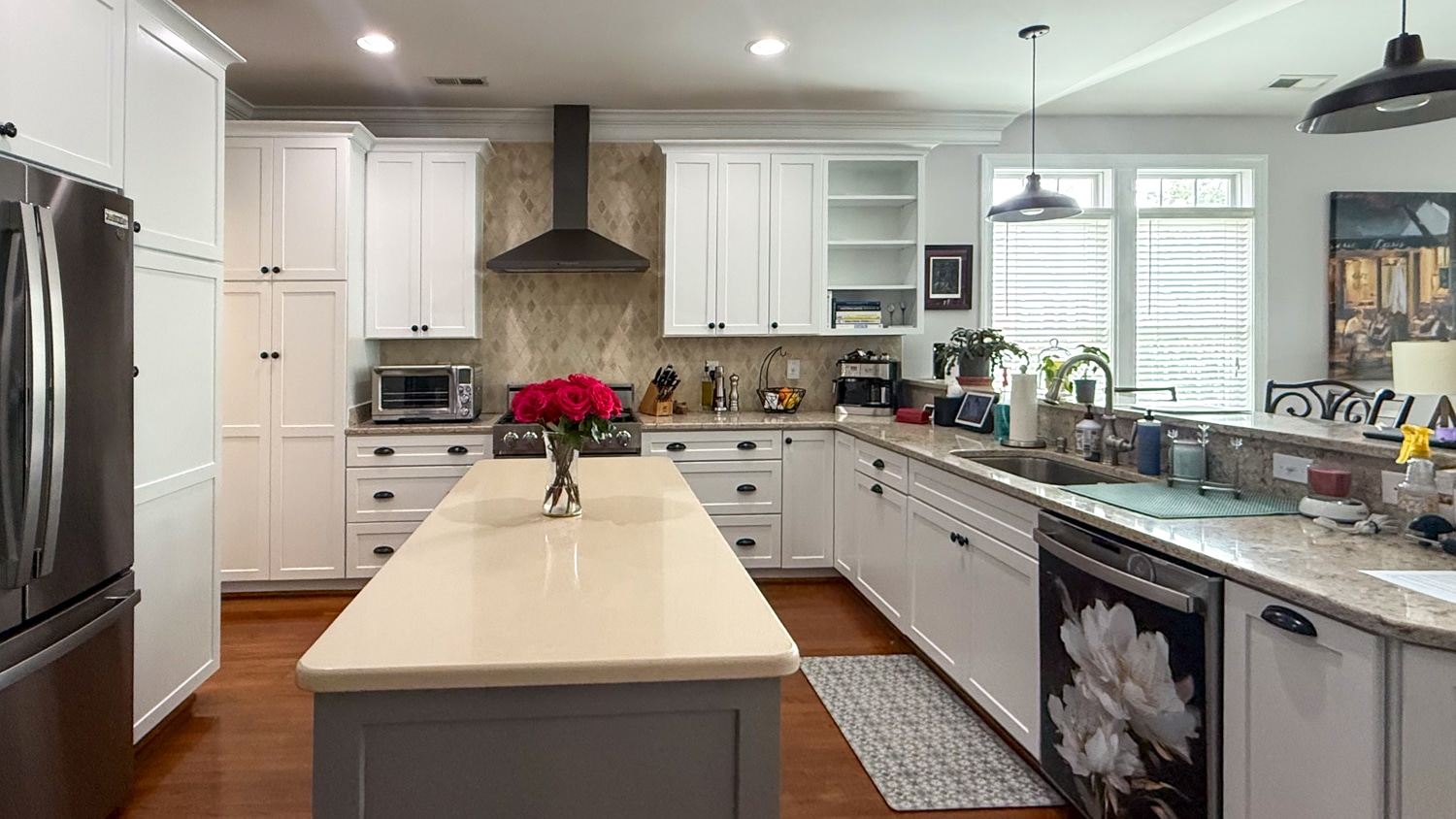
Most homeowners ask us this standing in a kitchen they like but no longer love. The layout works, the boxes are solid, and the doors are just tired. In our experience, kitchen cabinet painting is worth it in most of those kitchens, because it costs a fraction of replacement and changes the room more than any other single project.
It is not worth it in every kitchen. We have walked away from jobs where the right answer was new cabinets, because we would rather say so on day one than hand back a nice finish sitting on a failing box.
After more than twenty years painting homes across Williamsburg and James City County, here is our honest breakdown of when painting pays off, what it costs, and what separates a finish that lasts fifteen years from one peeling by the second summer.
Key Takeaways
- Painting runs about 20 to 30 percent of the cost of replacement, and half the cost of refacing.
- The decision comes down to the boxes, not the doors. Solid boxes with dated doors are ideal.
- Prep wins or loses the job. Degreasing, sanding, and the right primer matter more than the paint brand.
- We spray doors and drawer fronts in a dedicated ventilated workshop, not your garage, which keeps dust, humidity, and overspray out of the finish.
- Cabinet-grade enamels cure hard. Wall paint on cabinets is the most common reason we get called to redo someone else’s work.
- A kitchen takes about one to two weeks, and you keep your sink and appliances for most of it.
- Painted cabinets in a coastal Virginia kitchen commonly last 10 to 15 years.
Table of Contents
- Is Kitchen Cabinet Painting Worth It? The Short Answer
- Which Cabinets Are Worth Painting
- Why We Spray Cabinet Doors in a Workshop
- What the Process Actually Looks Like
- Choosing the Right Paint and Sheen
- Common Mistakes We Get Called to Fix
- How Long Painted Cabinets Last
- The Best Time of Year to Paint Cabinets Here
- Color Choices That Work in Williamsburg Kitchens
- Frequently Asked Questions
- Get a Free Estimate
Is Kitchen Cabinet Painting Worth It? The Short Answer
Yes, for most homeowners. If your cabinet boxes are sound and the layout still works for how you cook, painting gives you the biggest visual change per dollar of any kitchen project, usually for 20 to 30 percent of what new cabinets cost.
The catch is that this is a finishing trade, not a painting trade. It rewards patience, controlled conditions, and the right coatings. Done casually, it looks rough within a year. Done properly, most people cannot tell a painted door from a factory finish. That is why we treat cabinet painting as its own service, with different products, equipment, and workflow than the walls around it.
Which Cabinets Are Worth Painting
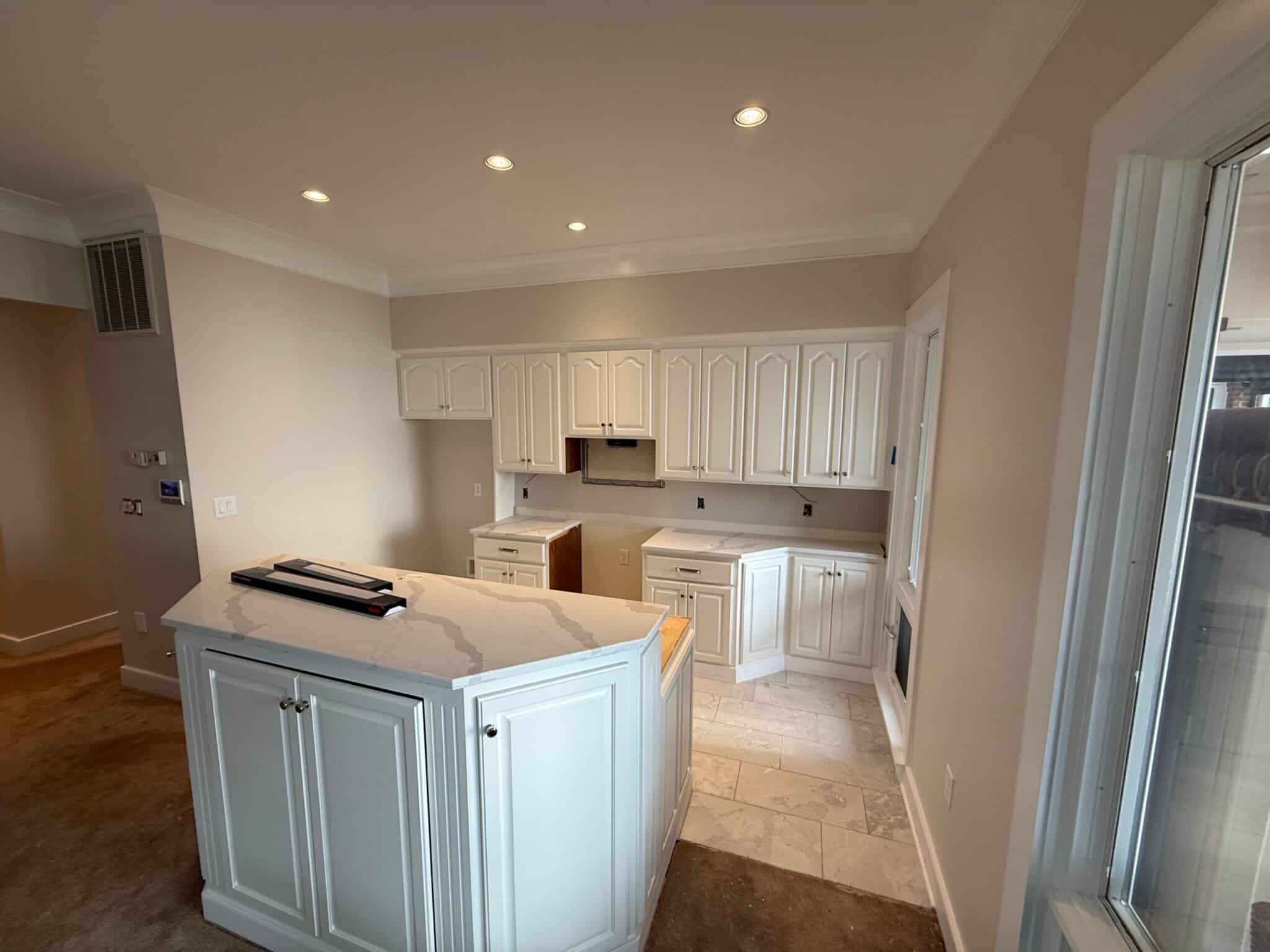
Our rule is simple: if the boxes are solid and the doors close square, paint them. If the boxes are swollen, sagging, or coming apart at the joints, paint is the wrong fix. A beautiful finish on a failing cabinet is money spent twice. Here is how the common cabinet materials in our area hold up.
| Cabinet material | Paints well? | What we watch for |
|---|---|---|
| Solid wood (oak, maple, poplar, birch, cherry) | Yes | Open-grain oak needs filling or the texture reads through |
| MDF doors and panels | Yes | Cut edges soak up primer and need sealing |
| Melamine and laminate boxes | Yes, with a bonding primer | Adhesion testing before we commit to the whole kitchen |
| Thermofoil (vinyl film over MDF) | Sometimes | Lifting film has to come off, which changes the scope |
| Particleboard with water swelling | No | Swollen board keeps moving and cracks the coating |
Water damage is the deal breaker we see most often, usually under the sink and along a dishwasher run, so we check those spots first on every estimate. A single failing base cabinet can often be rebuilt while everything else gets painted, which our carpentry and home repair crew handles in the same project.
Older homes carry one more consideration. If your kitchen predates 1978, existing coatings may contain lead, and the EPA’s Renovation, Repair and Painting Rule requires contractors disturbing those surfaces to be certified in lead-safe work practices. That comes up regularly in the older parts of Williamsburg and Yorktown, and it is worth asking any contractor directly.
Why We Spray Cabinet Doors in a Workshop
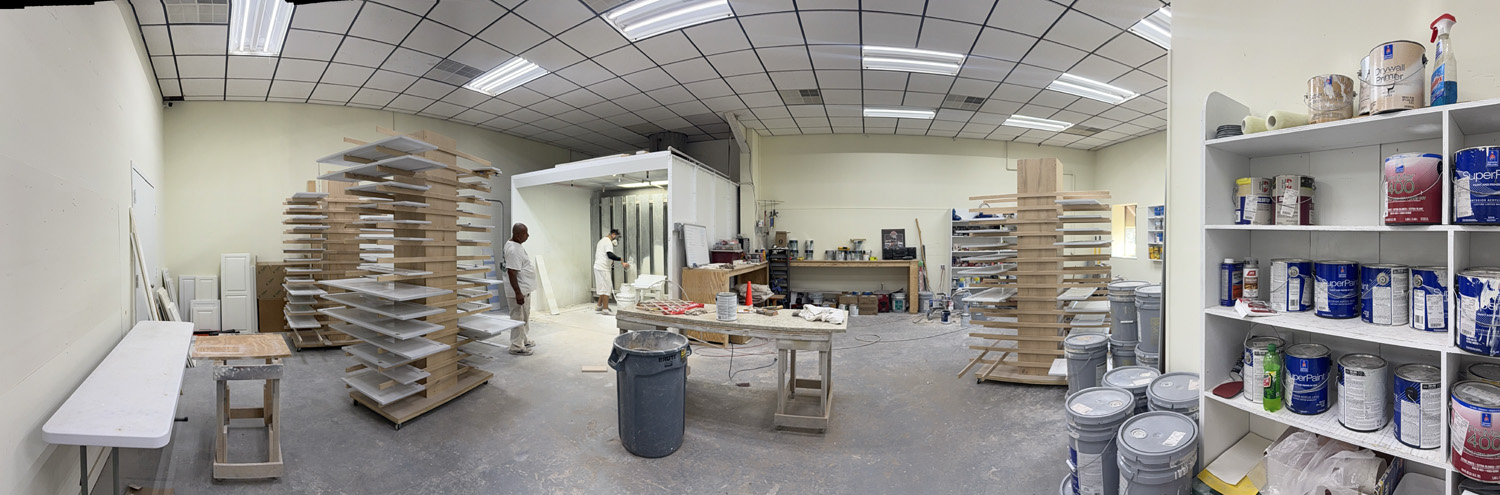
Cabinet finishes fail because of dust, humidity, and temperature swings during cure. We removed all three by building a dedicated ventilated workshop for cabinet spraying, so doors and drawer fronts are never finished in your garage, your driveway, or a tented-off dining room.
That matters more here than it would in a dry climate. Coastal Virginia humidity slows cure time and can leave a soft finish that marks under a fingernail. Spring pollen coats every horizontal surface for weeks. A garage door opening and closing sends dust straight into wet paint.
The workshop changes the result in three ways. Doors are sprayed flat, so the enamel levels instead of running. Both sides get finished properly, including the edges most on-site jobs rush. And doors stay racked while they cure hard, which takes days rather than hours.
A cabinet door is a piece of furniture. It deserves to be finished like one, not painted on a sawhorse in a driveway in August.
Your boxes, face frames, and interiors are still prepped and finished in place with containment. Those are the flat, forgiving part of the job. The doors are where the eye goes, and those come to us.
What the Process Actually Looks Like
A professional kitchen cabinet painting job takes one to two weeks, and most of that is prep and cure rather than application. Here is the sequence we follow on nearly every kitchen.
- Label and remove. Every door, drawer front, hinge, and pull is numbered and mapped so it returns to the exact opening it came from.
- Degrease. Cabinets carry years of cooking oil, and nothing sticks to grease. We clean and rinse before any sandpaper comes out.
- Repair. Loose joints, chipped edges, worn drawer glides, and old hardware holes get handled while the doors are off.
- Sand. The goal is a uniform scuff for the primer to bite into, not bare wood.
- Prime. We match primer to substrate: bonding primers for slick factory finishes and laminate, stain-blocking primers for tannin-heavy oak and cherry that would otherwise bleed yellow through white paint.
- Fill grain, if needed. On open-grain oak, this is the difference between painted oak and a smooth modern door.
- Spray and cure. Two finish coats in the workshop with sanding between, then cure racked.
- Finish the boxes on site. Face frames and interiors are coated in place under containment.
- Rehang and adjust. Doors go back on, hinges get set square, and new hardware goes on if you are changing it.
You keep your sink, stove, and refrigerator through almost all of it, which is one of the quiet advantages of painting over replacing. You can see finished kitchens from around the area in our project gallery.
Choosing the Right Paint and Sheen
Cabinets need a coating that cures hard and resists blocking, the tendency of two painted surfaces to stick when a door closes against a frame. Wall paint never fully hardens, which is why doors painted with it peel at the contact points within a year. These are the products we reach for most often.
| Product | Type | Why we use it |
|---|---|---|
| Sherwin-Williams Emerald Urethane Trim Enamel | Waterborne urethane alkyd | Hard, washable, strong blocking resistance, little yellowing on whites |
| Benjamin Moore Advance | Waterborne alkyd | Long open time and excellent leveling for a very smooth sprayed door |
| Bonding and stain-blocking primers | Shellac or acrylic based | Adhesion on slick surfaces, blocks tannin bleed from oak and cherry |
| Standard interior wall paint | Acrylic latex | Not used on cabinets. Stays soft and blocks at contact points |
Sheen is the other decision, and it affects both durability and how much your doors show their age.
| Sheen | Look | Best use |
|---|---|---|
| Matte | Flat, no reflection | Rarely a good fit. Hard to wipe clean |
| Satin | Soft, low sheen | Our most common choice. Cleans well, hides minor imperfections |
| Semi-gloss | Noticeable shine | Busy family kitchens and traditional or colonial-style cabinetry |
| Gloss | Near mirror finish | Modern flat-panel doors only. Magnifies every flaw underneath |
Common Mistakes We Get Called to Fix
Most failed cabinet jobs we are asked to repair trace back to one of five things, and only one involves the paint itself.
- Skipping the degreaser. Sanding grease just spreads it. The finish looks fine for a month, then lifts near the stove and trash pull-out.
- Using wall paint. It never cures hard enough for a surface touched twenty times a day.
- Wrong primer, or none. Oak and cherry tannins bleed through white paint and turn it amber without a stain-blocking primer.
- Rushing the cure. Enamel can feel dry in hours and still need weeks to harden. Stacking or hanging doors early leaves permanent marks.
- Painting hinges and slides. Painted hardware binds, and the doors never sit right again.
The same prep-first thinking runs through our interior house painting work, but cabinets are less forgiving. A wall can hide a shortcut. A cabinet door at eye level cannot.
How Long Painted Cabinets Last
Properly prepped and sprayed cabinets in a coastal Virginia kitchen usually look good for 10 to 15 years. High-touch spots near the sink, range, and trash pull-out wear first, and those doors can be refinished individually long before the whole kitchen needs attention. A few habits make the difference between ten years and fifteen.
- Wipe spills and splatter promptly, especially cooking oil near the range.
- Clean with a damp cloth and mild dish soap. Skip magic erasers and abrasive cleaners, which burnish the sheen unevenly.
- Run the range hood while cooking. It pulls grease and moisture out before they settle on the doors.
- Add soft-close bumpers to cut the impact that wears the finish at contact points.
- Watch under the sink for leaks. Moisture there causes more cabinet failures than anything else in the kitchen.
- Give a new finish about 30 days of gentle treatment while it reaches full hardness.
Humidity is the background factor here. Homes throughout Toano, Norge, and Providence Forge run damp much of the year, and a damp kitchen ages any finish faster. Ventilation helps your cabinets the same way it helps the rest of the house.
The Best Time of Year to Paint Cabinets Here
Cabinet painting works year-round here, which is one of its advantages over exterior work. Because the doors are sprayed and cured in a climate-controlled workshop, the weather outside stops driving the schedule.
Homeowners still favor certain months. October and November book up fast ahead of holiday hosting, while late winter and early spring have more openings before exterior season starts. Spring adds one local wrinkle: pollen in James City County coats everything, so on-site work goes best with windows closed and containment tight.
Color Choices That Work in Williamsburg Kitchens
Warm whites and soft greiges suit most homes around here, and a deeper color on an island or base run gives you contrast without committing the whole kitchen.
Local architecture nudges the choices. Colonial and traditional homes in and around Williamsburg look right with warm off-whites, muted sage and blue-greens, and classic black or navy on a single island. Cooler grays that look sharp in a magazine can read flat against the warm wood trim common in those homes. Newer construction in Yorktown and around Toano often has more daylight and cooler trim, which opens up crisper whites and true grays.
Two practical tips. Look at samples in your own kitchen at three times of day, because north-facing kitchens shift noticeably from morning to evening. And hold the sample against the counter and floor you already own, not against a white wall. Your cabinets have to live with those materials, not with the paint chip.
Thinking about the rest of the house? Our guide to the signs you need interior painting helps you sequence a kitchen refresh with the rooms around it, and our painting resources page collects the rest.
Frequently Asked Questions
How long does kitchen cabinet painting take?
Plan on one to two weeks for a typical kitchen. Day one is labeling, removal, and degreasing. The doors then go to our workshop for sanding, priming, spraying, and curing, which is the longest stretch of the project. While that happens, the boxes and face frames are prepped and finished in your kitchen. Rehanging and hardware is the last day. You keep your sink, range, and refrigerator throughout, though you will live without cabinet doors for about a week. Kitchens needing heavy carpentry repairs or grain filling on oak run a few days longer.
>Do painted cabinets chip and peel?
Properly prepped cabinets sprayed with a cabinet-grade enamel resist chipping through normal daily use. Peeling is almost always a prep failure, not a paint failure. The usual causes are grease left on the surface, no sanding, the wrong primer for the substrate, or wall paint used instead of an enamel. When those steps are right, the coating bonds and stays put. Expect some wear at the highest-touch spots after a decade, which can be spot-refinished without redoing the kitchen.
Can you paint oak cabinets without the grain showing?
Yes, but it takes an extra step. Oak has an open grain that telegraphs through paint, so doors need to be grain filled and sanded smooth before priming. That adds labor and cost, and it is worth asking about specifically when you compare estimates, since it is a common place for a low bid to cut corners. Some homeowners like a bit of grain texture showing because it reads as authentic on an older home. We show samples both ways so you can decide before we start.
Is it cheaper to paint or replace kitchen cabinets?
Painting is much cheaper, usually 20 to 30 percent of replacement cost for a comparable kitchen. Replacement makes sense when you want a different layout, the boxes are damaged, or you need more storage than the current footprint allows. If the boxes are sound and the layout works, painting delivers most of the visual change for a fraction of the cost and disruption. Refacing sits between the two, giving you new door fronts on existing boxes at roughly double the cost of painting.
Can I stay in my house while my cabinets are painted?
Yes, and nearly all of our clients do. Because doors and drawer fronts are sprayed off site in our workshop, the spraying odor and overspray never enter your home. On-site work is limited to the boxes and face frames, done with containment and low-odor products. Your kitchen stays usable, though counters near the work area will be covered and simpler meals help for a few days. Households with young children, pets, or anyone sensitive to odor find cabinet painting far easier to live through than a remodel.
Does painting cabinets help when selling a home?
It helps a great deal, because kitchens drive buyer impressions more than almost any other room. Dated cabinets read as a project a buyer will have to take on, and buyers price that project higher than it actually costs. A clean, neutral painted kitchen removes the objection for a modest investment. For sellers we usually suggest a warm white or soft neutral rather than a bold color, paired with fresh hardware. If you are preparing a home for market, it is one of the highest-return projects on the list.
How do I choose a cabinet painting contractor?
Ask three questions. Where do the doors get sprayed, and is it a controlled space or your garage? What primer and finish products are used, and why those for your specific cabinets? And can you see finished kitchens they completed at least a few years ago, not just fresh photos from last week? The answers separate contractors who treat cabinets as a specialty from those who treat them as an add-on. You can learn more about our team and how we work, and see completed cabinet projects across our residential services.
Get a Free Estimate
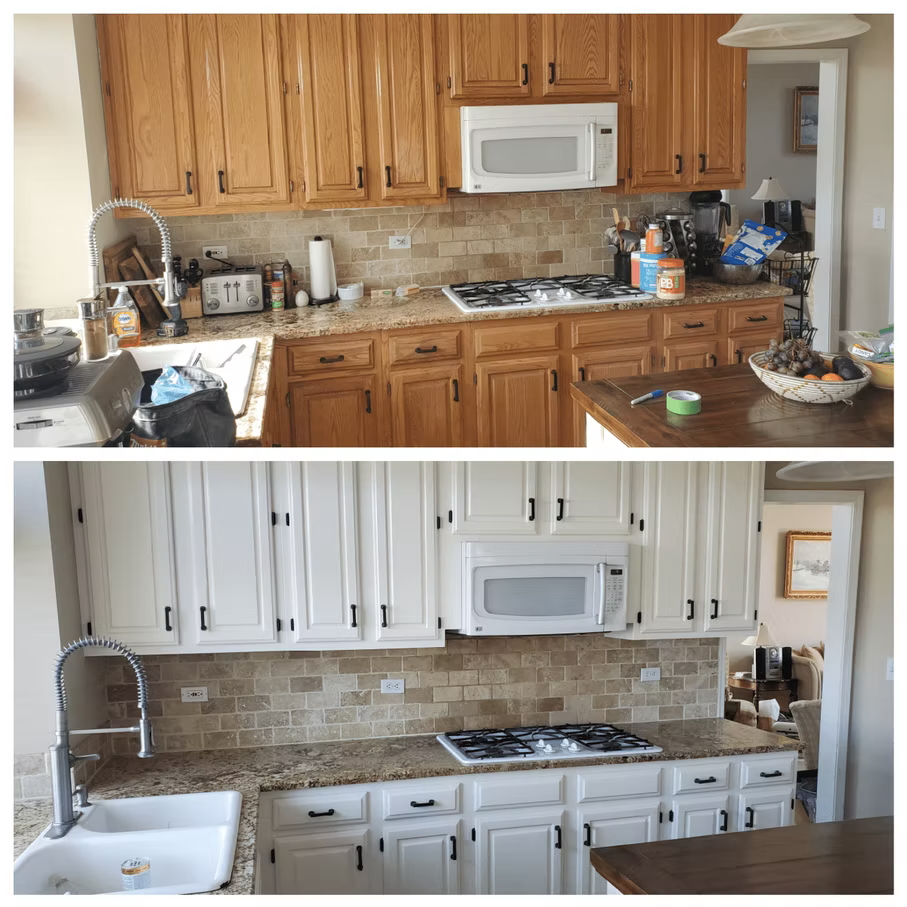
The honest answer for your kitchen depends on your specific cabinets, and that takes about twenty minutes to determine in person. We check the boxes, look under the sink, test the door finish, and tell you plainly if kitchen cabinet painting is the right call or if your money is better spent elsewhere.
We have been painting kitchens across Williamsburg, James City County, Yorktown, Toano, Norge, and Providence Forge for over two decades, and we would rather give you a straight answer than a sales pitch.
Request your free cabinet painting estimate and we will walk your kitchen with you, explain what we would do and why, and leave you a clear written number with no pressure attached.