
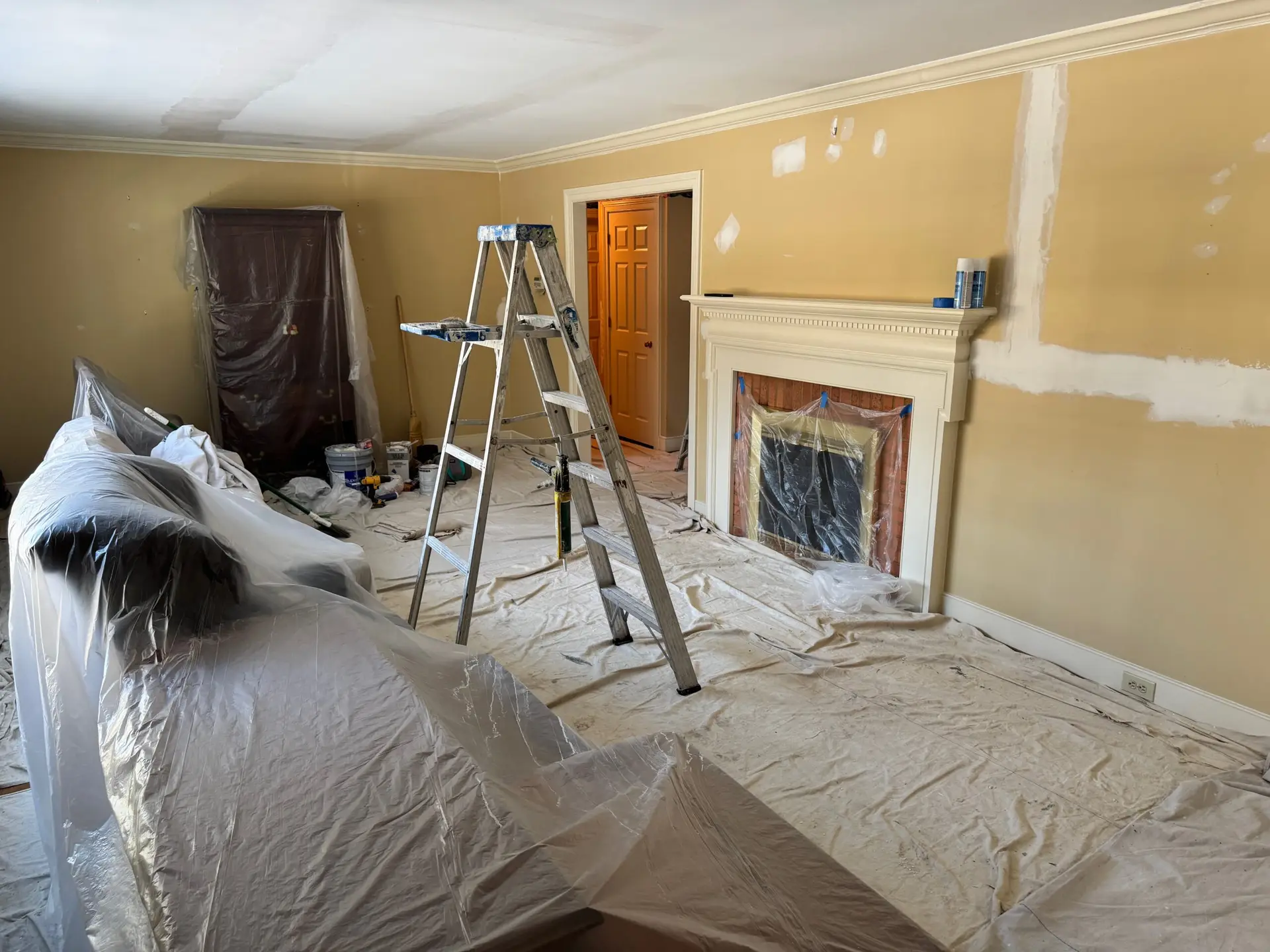
You picked the color and took the pictures down, and now every nail hole, doorknob dent, and hairline crack is staring back at you. Can you just paint over it? Not if you want it to look right. Drywall repair before painting keeps your new color from highlighting every flaw underneath it.
After more than 20 years painting homes across Williamsburg and James City County, we know most of a great finish comes from prep. Here is what to fix, how long to let it dry, and when to call a pro.
Key Takeaways
- Repair drywall before you paint, since fresh paint makes flaws easier to see.
- Small spackle fills dry in one to two hours. Joint compound over tape or mesh needs about 24 hours, and longer in humid weather.
- Sand patches with a 120 to 150 grit sanding sponge and light pressure.
- Always prime patches, or they will show through as dull spots called flashing.
- Nail holes, dings, and nail pops are DIY friendly. Large holes, water damage, and recurring cracks usually need a pro.
Should You Repair Drywall Before Painting?
Yes. Paint does not fill holes, cracks, or dents, and it actually makes them easier to see in side light from a window. Patch, sand, and prime every damaged spot before your first coat so the finished wall looks smooth from every angle.
Repairs also give paint a sound surface to grip, since paint over loose tape or crumbling edges tends to peel. Not sure your walls need fresh paint yet? Read our guide to the signs you need interior painting.
Common Drywall Damage and How to Fix It
Small holes and dents only need lightweight spackle. Cracks and bigger holes need tape or a patch, and water damage needs the leak fixed first. Here is how the most common problems compare.
| Damage | Common Cause | Best Fix | DIY Friendly? |
|---|---|---|---|
| Nail holes and dents | Pictures, furniture, doors | Spackle, sand, spot prime | Yes |
| Nail pops | Framing lumber shrinking | Drywall screws, then patch | Usually |
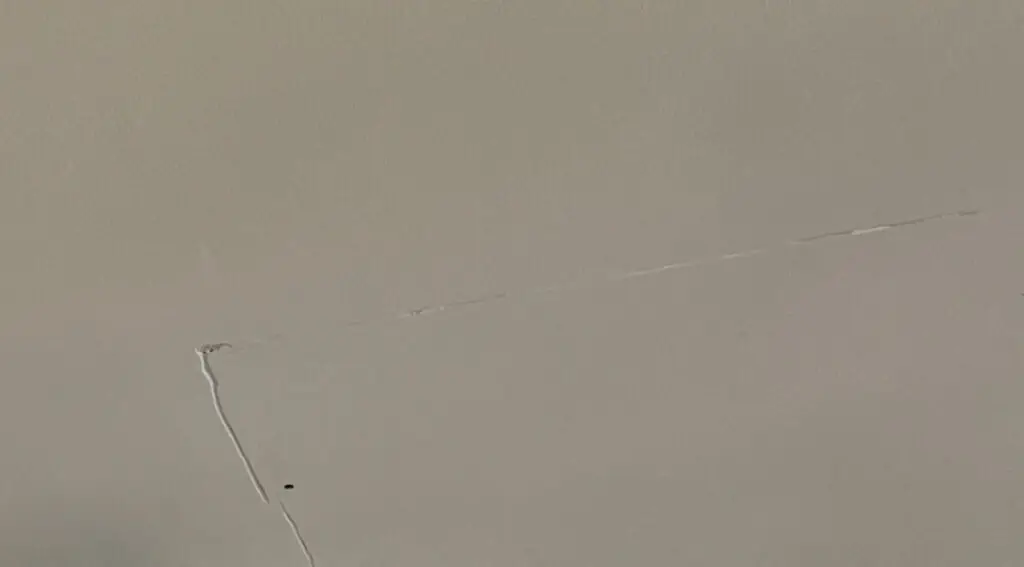
| Hairline cracks | Seasonal movement | Tape and joint compound | Sometimes |
| Holes up to 4 inches | Doorknobs | Mesh patch and compound | Usually |
| Holes over 4 inches | Accidents or plumbing work | New drywall piece, tape, finish | Pro recommended |
| Water stains or soft spots | Roof, plumbing, or AC leaks | Fix leak, replace wet board | Pro recommended |
To find every flaw, hold a flashlight flat against the wall with the lights off. Circle each spot in pencil, since pen and marker can bleed through paint.
Drywall Repair Before Painting, Step by Step
Good drywall repair before painting follows a simple order: clean, fix the cause, fill, dry, sand, and prime. Most patches that show through new paint skipped a step, usually drying time or primer. Here is the process our painters follow.
- Clean the wall. Wipe off dust and grime with a damp sponge and let it dry completely, because priming or painting a damp wall can blister.
- Fix the cause. Secure nail pops with screws and stop any active leak first.
- Fill in thin coats. Feather the edges a few inches past the damage with a flexible putty knife. One thick coat shrinks, cracks, and dries slowly.
- Let it dry. Give small fills an hour or two, and compound over tape or mesh about 24 hours.
- Sand it smooth. Use a 120 to 150 grit sanding sponge with light pressure. If you can feel an edge, you will see it after painting.
- Wipe and prime. Remove sanding dust with a damp cloth, let it dry, and spot prime every patch.
How Long Should Drywall Patches Dry Before Painting?
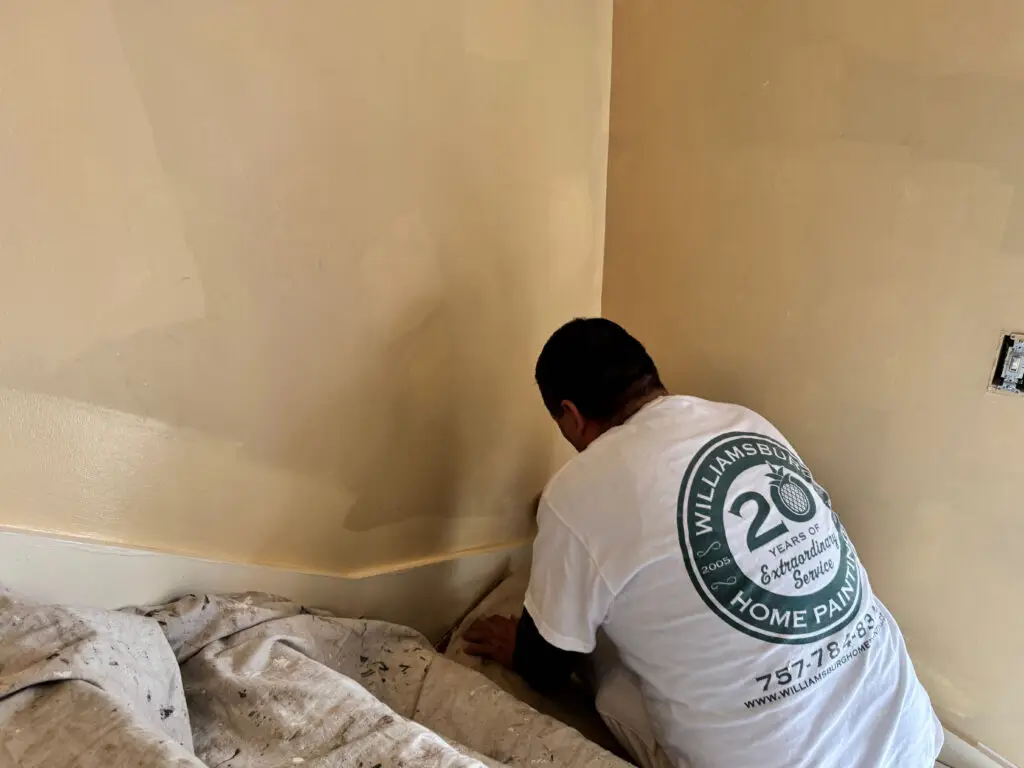
Small spackle fills are usually ready in one to two hours. Joint compound over tape or a mesh patch needs about 24 hours, and a thick fill can take longer. Always check the product label, since lightweight and fast-setting compounds run on different timelines.
Joint compound dries by evaporation, so humidity changes the math. A patch that dries overnight in January can stay soft for a day or more in a humid Williamsburg August, especially in a closed-up room with the AC off. Running the AC or a fan speeds things up, and fall and winter are often the easiest seasons for interior repairs.
A dry patch is evenly light in color with no darker, damp-looking spots, and it will not feel cool to the touch. For deeper fills, we often use setting-type compound, which hardens chemically instead of air drying.
Do You Have to Prime Drywall Patches Before Painting?
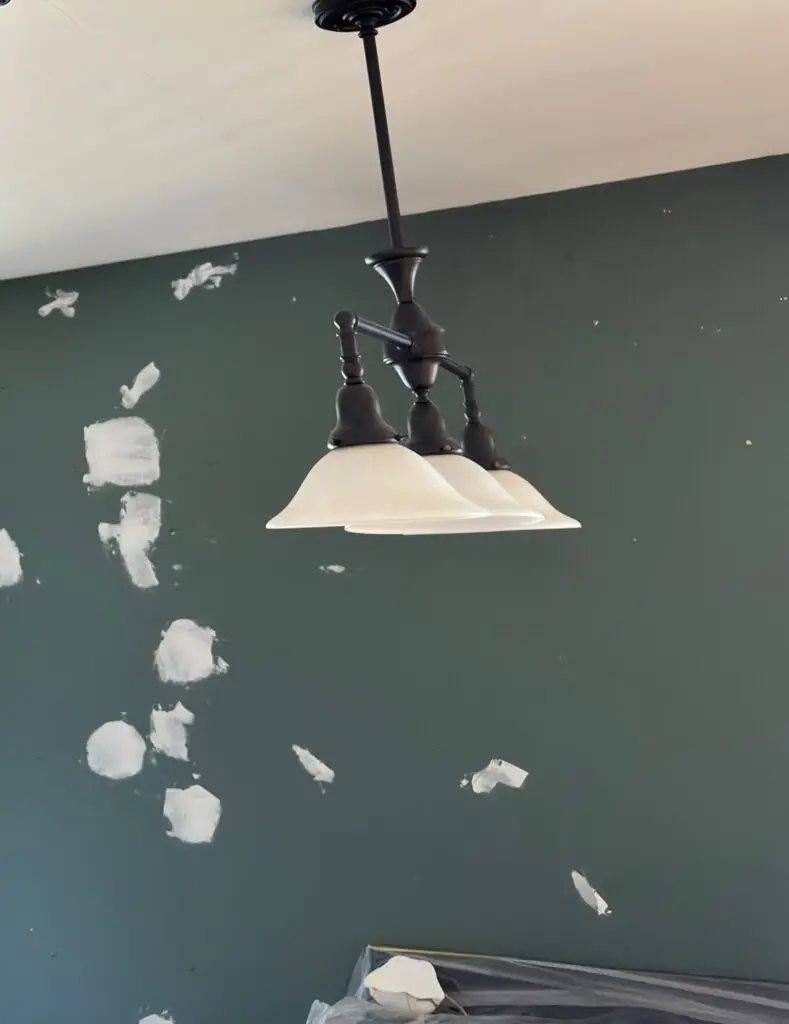
Yes, prime every patch. Fresh spackle and joint compound are porous, so they soak up paint differently than the rest of the wall and leave dull or shiny spots called flashing. Primer seals the patch so your finish coat dries to one even sheen.
That is why Sherwin-Williams recommends spot priming patched areas. Paint and primer in one products work fine over sound painted walls, but bare compound still needs a dedicated primer.
| Situation | Our Recommendation |
|---|---|
| A few patches on a flat or matte wall | Spot prime each patch |
| Many patches, or an eggshell or satin finish | Prime the entire wall |
| Water stains or smoke marks | Stain-blocking primer |
| Major color change | Tinted primer on the entire wall |
Sheen matters too. Flat and matte paints hide small flaws, while shinier finishes show every patch.
How to Fix Nail Pops in Drywall
Drive a drywall screw about an inch and a half from the popped nail, set the nail just below the surface, then patch over both spots. Nail pops happen because framing lumber shrinks as it dries, so the fastener slowly works its way out of the stud.
We see plenty of them in newer neighborhoods around James City County and Toano, usually in a home’s first few years. A nail pop that only gets patched over will come back, so secure the spot with a screw before you fill it.
Common Drywall Repair Mistakes
The most common mistakes are painting before patches are fully dry, skipping primer, piling on thick filler, and painting over stains. Each one leads to patches that show, crack, or peel, which usually means repainting the wall.
- Caulking wall cracks. Caulk never sands flat, so it looks shiny and lumpy in the middle of a wall.
- Painting over stains or mold. Stains bleed through regular paint, and paint over mold tends to peel. Stains below windows can come from failed exterior caulk or other moisture intrusion, so find the source first.
- Sanding old paint without testing it. Homes built before 1978 may contain lead paint, and the EPA notes that disturbing it can create dangerous lead dust.
- Over-sanding. Heavy sanding scuffs the drywall paper and leaves a fuzzy texture under the paint.
DIY or Hire a Pro?
Nail holes, small dings, and a few nail pops are easy DIY fixes. Large holes, ceiling cracks, water damage, and textured walls are usually worth hiring out, because matching the surrounding surface is harder than it looks and mistakes show once the paint goes on.
Our interior painting process already includes routine prep like filling nail holes, dents, and minor cracks. Larger repairs take longer because each coat of compound has to dry before the next, so they are handled separately. Browse our project gallery to see how finished walls should look.
Frequently Asked Questions
Can you paint over nail holes without filling them?
You can, but you probably will not like the result. Paint may bridge a tiny finishing nail hole, but anything larger stays visible as a small shadow, and fresh paint often makes it stand out more. Filling nail holes takes only a few minutes per wall with lightweight spackle and a putty knife, followed by a light sanding and a dab of primer once it dries. The only holes worth skipping are ones a rehung picture will cover.
What grit sandpaper should you use on drywall before painting?
Use a 120 to 150 grit sanding sponge or sandpaper on dried compound, and save 220 grit for a light final pass on a smooth wall. Coarser paper cuts fast but scuffs the paper face of the drywall, which leaves a fuzzy texture that shows through paint. Keep the pressure light and check your work with your hand instead of your eyes. Wipe the dust off with a damp cloth before you prime.
Why do the same drywall cracks keep coming back?
Cracks that return are usually caused by movement. Seasonal swings in temperature and humidity make framing expand and contract, so cracks often reopen at the corners of doors and windows. Spackle alone rarely holds, so the better fix is to open the crack slightly, embed mesh tape, and finish with thin coats of joint compound. If a crack keeps growing, is wider than about a quarter inch, or runs across the ceiling, have it looked at before painting.
Will a painter fix drywall, or do you need a separate contractor?
Most professional painters handle routine drywall repair like nail holes, dents, small cracks, and nail pops as part of an interior painting job. Bigger repairs are a different story, and not every painting company takes them on, so ask before you hire. At Williamsburg Home Painting, larger drywall repairs, like replacing water-damaged sections, go through our carpentry and home repair team. One company handles the repair and the painting, so you are not coordinating two contractors.
Get Your Walls Ready for Paint
Drywall repair before painting is what helps create a smooth, professional-looking finish. Fix the damage, allow repairs to dry completely, and prime each patch before applying your finish coat.
At Williamsburg Home Painting, every interior painting project starts with careful preparation, from Williamsburg and Norge to Providence Forge, Yorktown, and James City County. If you are planning to repaint and are not sure what your walls need, request a free painting estimate and we will take a look.
Planning a bigger refresh? Our guide to updating a traditional Williamsburg home covers what to keep and what to change.